Navigating the financial frontier: Strategies for modern healthcare operations
Christian Soriaga, CPA2 min read
Healthcare organizations are currently navigating a challenging economic landscape characterized by thin operating margins and complex billing structures. To maintain long-term viability, providers are increasingly turning to advanced cost accounting and revenue cycle intelligence, transforming back-office functions into strategic assets that optimize both clinical performance and financial stability.
Key takeaways
- Transition from traditional cash-basis accounting to modern analytical methods to uncover true operational costs.
- Implement automated verification layers to prevent revenue leakage caused by undetected eligibility lapses.
- Integrate clinical data with financial systems to achieve granular visibility into the cost of specific patient encounters.
- Leverage specialized leadership to oversee revenue cycles, ensuring that performance remains aligned with both regulatory standards and strategic financial goals.
The hidden revenue gap in home health
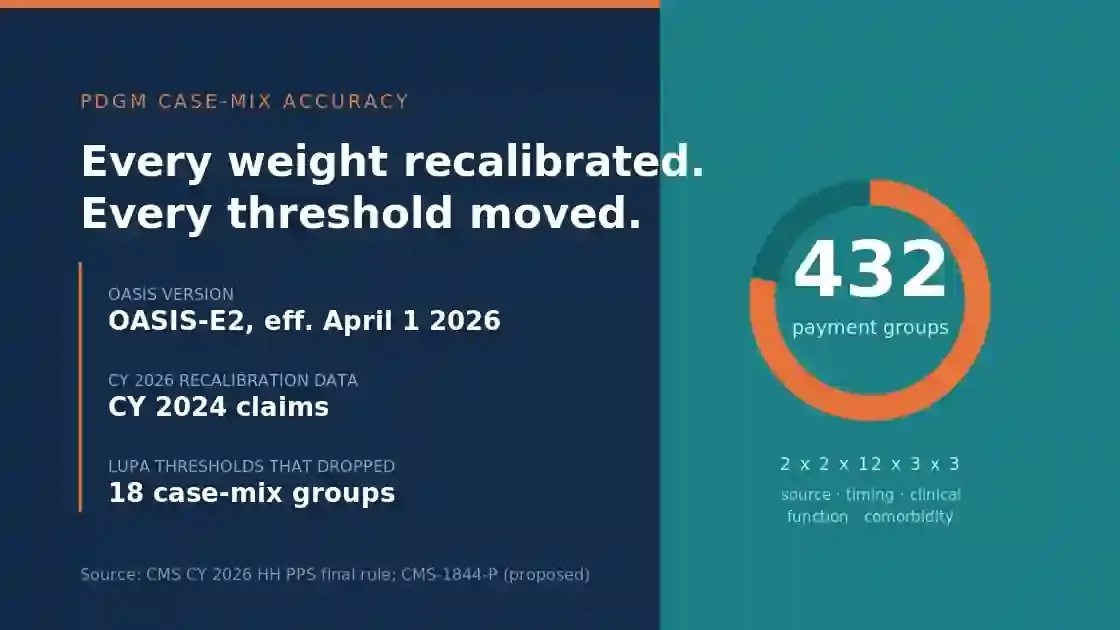
Many home health agencies operate on cash-basis accounting models, which often mask systemic revenue loss. When billing codes are retired or claims fail silently, the deficit never appears as a specific line item on a profit and loss statement. Industry data indicates that many organizations fail to capture the full comorbidity adjustments available under the Patient-Driven Groupings Model. By failing to bridge the gap between clinical documentation and billing, agencies frequently deliver complex care while receiving reimbursement at lower, simplified rates.
Improving cost visibility through accounting
To survive in an environment where profit margins are razor-thin, hospitals are adopting sophisticated cost-accounting systems. These tools go beyond basic expenses by integrating electronic medical records directly with financial data. This allows administrators to track the cost of specific procedures—down to the individual device or the precise amount of time spent on an imaging scan.
| Accounting approach | Primary objective |
|---|---|
| Activity-Based Costing | Allocates indirect costs based on specific departmental activities |
| Standard Costing | Uses historical benchmarks to simplify budget building |
| Microcosting | Uses ledger data to determine costs for every resource used in care |
By "budgeting from reality," systems like Temple University Health are able to weed out inefficiencies, negotiate more effectively with insurers, and understand the exact costs associated with delays in patient transfers or unnecessary supply usage. This level of transparency shifts the focus toward providing high-quality care while minimizing waste.
Strategic leadership in revenue management
As healthcare becomes more complex, the role of revenue cycle directors has evolved. Organizations are increasingly hiring experts who possess a deep blend of corporate accounting, health information technology, and strategic operational experience. These leaders are essential for overseeing accurate billing and identifying process improvements. By viewing the revenue cycle as a real-time intelligence layer rather than just a back-office task, healthcare networks can stabilize their financial performance and remain proactive in the face of ongoing reimbursement cuts and regulatory pressures.
Sources
- The revenue gap hiding in home health billing, McKnights Home Care.
- Cost Accounting in Healthcare Explained: How Does It Work?, Oracle NetSuite.
- Temple University Health System tries to improve hospital cost transparency using accounting, Inquirer.com.
- How Much Can You Make?, Herzing University.
- Dubchak named director of revenue cycle for Iredell Physician Network, Iredell Free News.