Navigating the Shift: Home Health Industry Faces New Regulations and Massive Settlement Payouts
Christian Soriaga, CPA2 min read
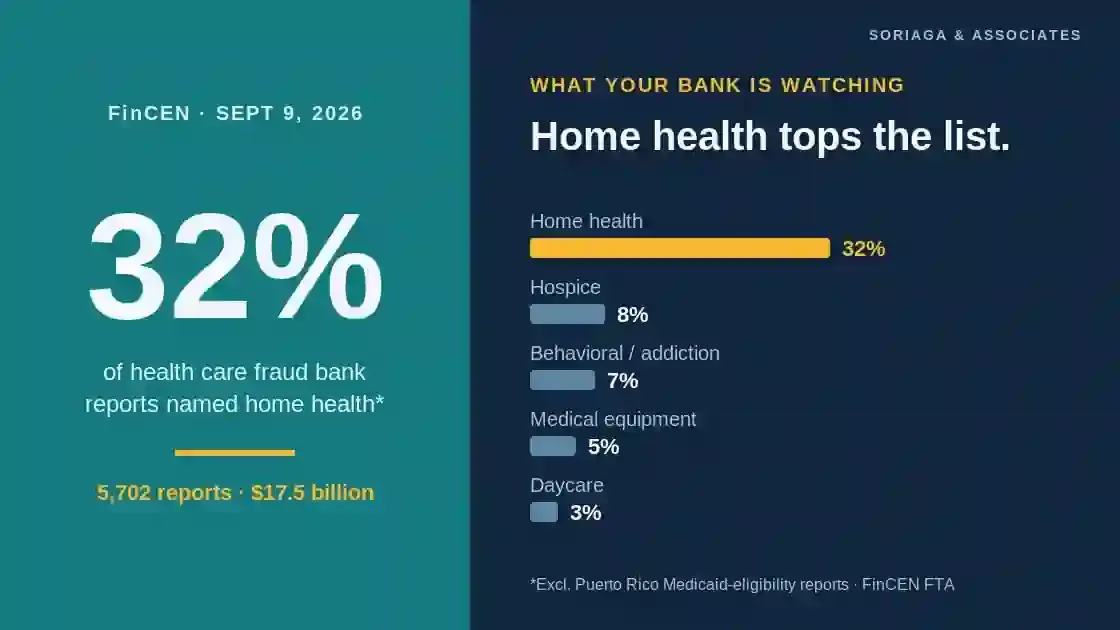
The home health industry is navigating a critical period marked by significant financial accountability and enhanced regulatory oversight. Following a $162 million legal settlement regarding worker compensation in New York and new federal proposals from the Centers for Medicare & Medicaid Services (CMS) aimed at curbing fraud and abuse, agencies are facing increased pressure to ensure full compliance and operational transparency.
Key industry developments
- Public Partnerships LLC reached a $162 million settlement covering more than 200,000 personal care assistants in New York.
- CMS has proposed a 2.4% aggregate payment increase for home health agencies for the 2027 fiscal year.
- New regulatory proposals include retroactive enrollment revocations to recover improper payments.
- Stricter requirements regarding majority ownership changes and broadened license termination criteria are under consideration.
- Agencies are being encouraged to integrate palliative care services more effectively within existing home health benefits.
Understanding the $162 million worker settlement
In a landmark legal development, Public Partnerships LLC and New York-based home health aides have reached a $162 million settlement. The agreement resolves long-standing allegations that the state’s financial intermediary for Medicaid home-care services failed to properly compensate workers. The settlement covers current and former personal care assistants who provided services in New York City, Long Island, and Westchester County between March 2025 and April 2026. This legal resolution underscores the growing emphasis on wage compliance and administrative accountability in the home health sector.
CMS initiatives on fraud and provider integrity
Beyond labor-related financial matters, the federal regulatory landscape is shifting. In its 2027 Home Health Prospective Payment System Proposed Rule, CMS introduced aggressive measures to combat fraud, waste, and abuse. A centerpiece of this effort is the proposal to make Medicare enrollment revocations retroactive. This change would allow the agency to more effectively recover funds paid to noncompliant providers—a process that currently faces limitations due to 30-day notice requirements.
Furthermore, the agency is tightening the rules surrounding ownership changes. Agencies that undergo significant shifts in majority ownership will likely be required to undergo full re-enrollment and survey processes to maintain their Medicare status. Additionally, the grounds for denying enrollment are being expanded to include license terminations or suspensions involving the provider’s owners and managing entities, ensuring that bad actors cannot simply reorganize to continue billing Medicare.
Financial outlook for 2027
Despite the tightening regulatory environment, the financial outlook for the coming year includes a modest growth trajectory. CMS estimates an aggregate payment increase of 2.4% for 2027, representing approximately $420 million in additional funding. This update balances a 2.1% payment rate increase against a 0.3% adjustment attributed to the proposed Fixed Dollar Loss. As the industry adapts to these changes, the focus remains on balancing modernized patient care—such as the expansion of palliative services—with the rigorous program integrity demands set forth by federal authorities.
Sources
- NY Home Health Paymaster, Workers Get $162 Million Pact Approval, Bloomberg Industry.
- CMS says it is cracking down on fraud in proposed home health rule, Healthcare Finance News.